View all articles

For landlords and small property businesses, keeping up with tax rules and regulations has never been more complicated. First there’s the rental income rules and the allowable expenses, then there’s capital gains tax and stamp duty land tax, and of course there’s Making Tax Digital.
Keeping on top of all of this can feel like a lot, especially as rules change and reporting requirements increase.
That last factor, Making Tax Digital, could present opportunities to make your lives easier if you start taking action now. With proactive tax management, not only will you be able to comply with the requirements for MTD, but you can simplify everything to do with tax – track rental income, categorise expenses and keep accurate digital records.
That’s why we’ve created this guide for self-managing landlords, portfolio landlords, small property businesses and anyone else who works in real estate who wants to get ahead of the game by embracing online property tax management software. We’ll run through the best tools that will save you time, money and an awful lot of stress.
UK-Specific Tax and MTD Challenges
As you will have heard, the UK tax system is undergoing major reform. From April 2026, landlords earning over £50,000 in rental income will be required to keep digital records and file quarterly updates under MTD for Income Tax Self Assessment (ITSA). From 2027, this extends to those earning over £30,000.
Having MTD compatible software isn’t a suggestion, it’s going to be a requirement. You will need to use, and be familiar with, software that can:
- Maintain digital records in HMRC-compatible formats
- Handle quarterly updates and align with SA105 forms
- Automate data entry from bank feeds and rental payments
- Track tax liability in real time to avoid unexpected tax bills
- Provide transparency across all of your properties and income streams
For many landlords, this is going to mean a major change to the way you keep your records. Spreadsheets and manual bookkeeping just won’t do anymore.
Must-Have Features Your Tools Should Have
Before we list some of the best property management software solutions that will help you comply with the impending changes, we thought we should run through some of the main features that you should be looking for.
First of all, and this is the obvious place to start, it needs to be HMRC-approved MTD compliant. HMRC will only accept submissions from certain software. So before you look anywhere else, make sure your new software is MTD compatible.
These other features are not quite as important, but are still features that you should look for:
- Real-time bank feeds – Automated reconciliation with your bank accounts will help reduce data entry errors and keep your financial records accurate.
- Rent & expense tagging per property – Essential for tracking rental profits, allowable expenses and mortgage interest deductions.
- Tax summary & SA105 mapping – Save time by generating reports aligned with self assessment tax returns.
- Tax forecasts and budgeting – Insight into future tax liability, helping you plan for due dates and avoid penalties. You’ll be able to budget and prevent any nasty surprises.
- Accountant access or data export – Tools that let you share data easily with your accountant improve compliance and accuracy.
How We Selected These Tools
We know the industry inside-out, so we applied that knowledge when we were compiling this list. This is what we were looking for:
- HMRC-recognised or pledged for MTD compliance
- Designed with landlords or property tax obligations in mind
- Suitable for both residential landlords and small property businesses
- Proven in the UK market with transparent pricing and positive user feedback
Tool Reviews & Feature Summaries
1. Landlord Vision
Best for: Landlords who want one platform to handle both property management and tax.
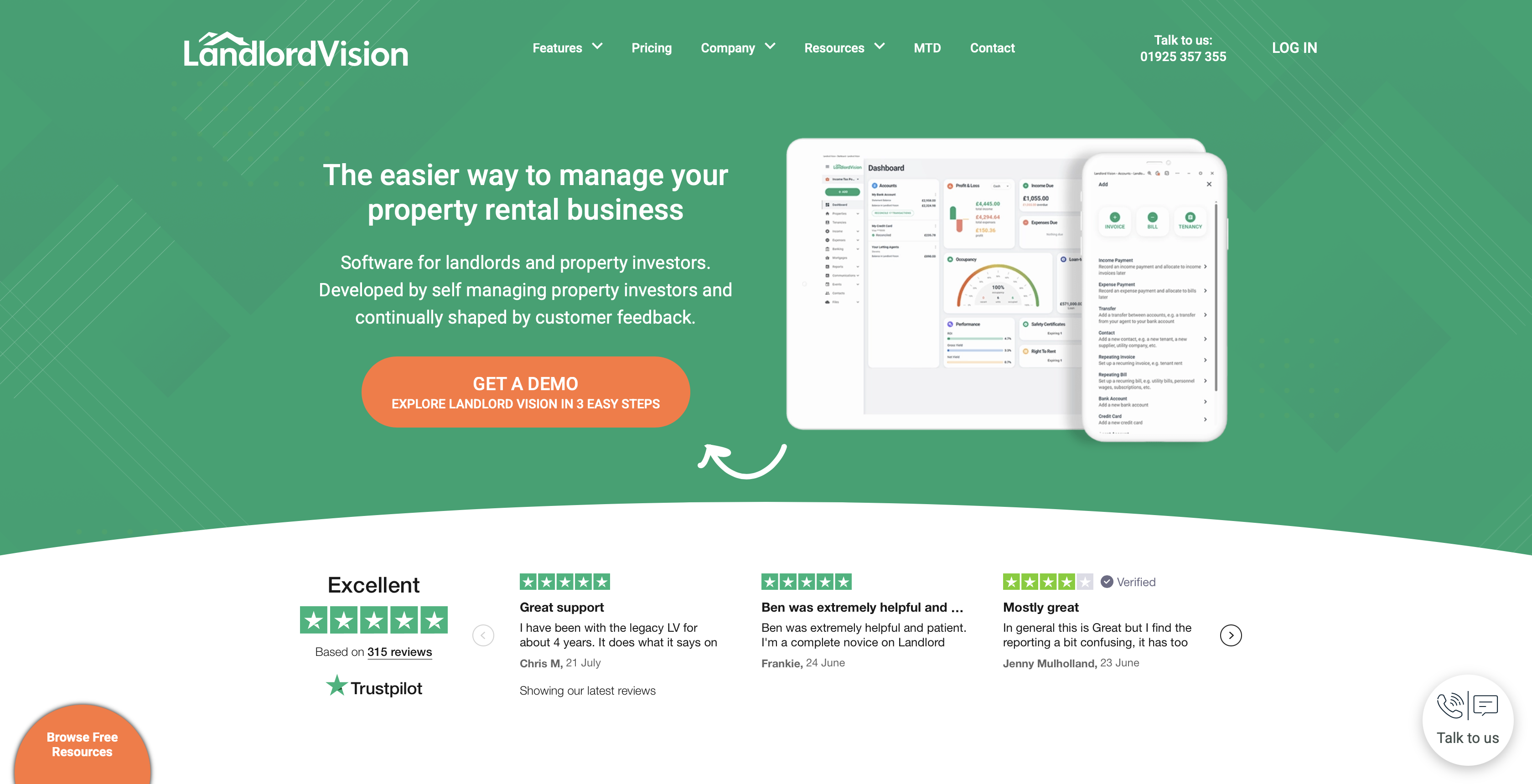
Landlord Vision is a UK-focused property portfolio management platform built for landlords who have outgrown spreadsheets and paperwork. It is designed for landlords running property like a business, where compliance tasks and record keeping become harder as portfolios grow.
For property tax management, the key advantage is how it keeps rental income, expenses, and supporting documents tied to the right property and tenancy. This makes it easier to maintain clean digital records, understand what is driving profitability, and share information with an accountant without pulling data from multiple systems.
Landlord Vision also supports wider property administration, including compliance tracking, document storage, and reporting. This is landlord software built for complex portfolios. Keeping finance and property administration connected in one platform helps reduce gaps, missed records, and last-minute tax stress.
Key features
Below are some of the features that help landlords keep cleaner tax records and stay organised:
| Feature | Description |
| Property level income and expense tracking | Tag rental income and costs to the right property, so your records stay consistent across a residential portfolio.Keep allowable expenses organised and easier to review at tax time. |
| Bank feeds and reconciliation | Pull transactions in automatically through bank feeds, reducing manual data entry.Match income and expenses to the right property, supporting cleaner records and fewer gaps. |
| Digital records for MTD aligned workflows | Maintain structured digital records designed to support MTD aligned workflows.Keep information organised for quarterly updates and end of year reporting as requirements change. |
| Tax summaries and reporting | Generate reports that support tax planning and year end preparation.Use clearer reporting to reduce end of year catch up and spot issues earlier. |
| Document storage for evidence | Store receipts, invoices, and key documents against the right property.Find supporting evidence faster when you need to review expenses or share information with an accountant. |
| Portfolio visibility for complex portfolios | See performance across properties in one place, which helps when income streams and costs grow more complex.Reduce reliance on separate spreadsheets and manual tracking. |
| Accountant access and collaboration | Share access or export records for your accountant, cutting down on back and forth.Keep your tax records and property administration aligned in one system. |
Pricing
Starter (5 tenancies) £19.97, Standard (10) £29.97, Premium (15) £39.97, Enterprise (25) £84.97.
2. Landlord Studio
Best for: Landlords who want to manage their tax from their phone.
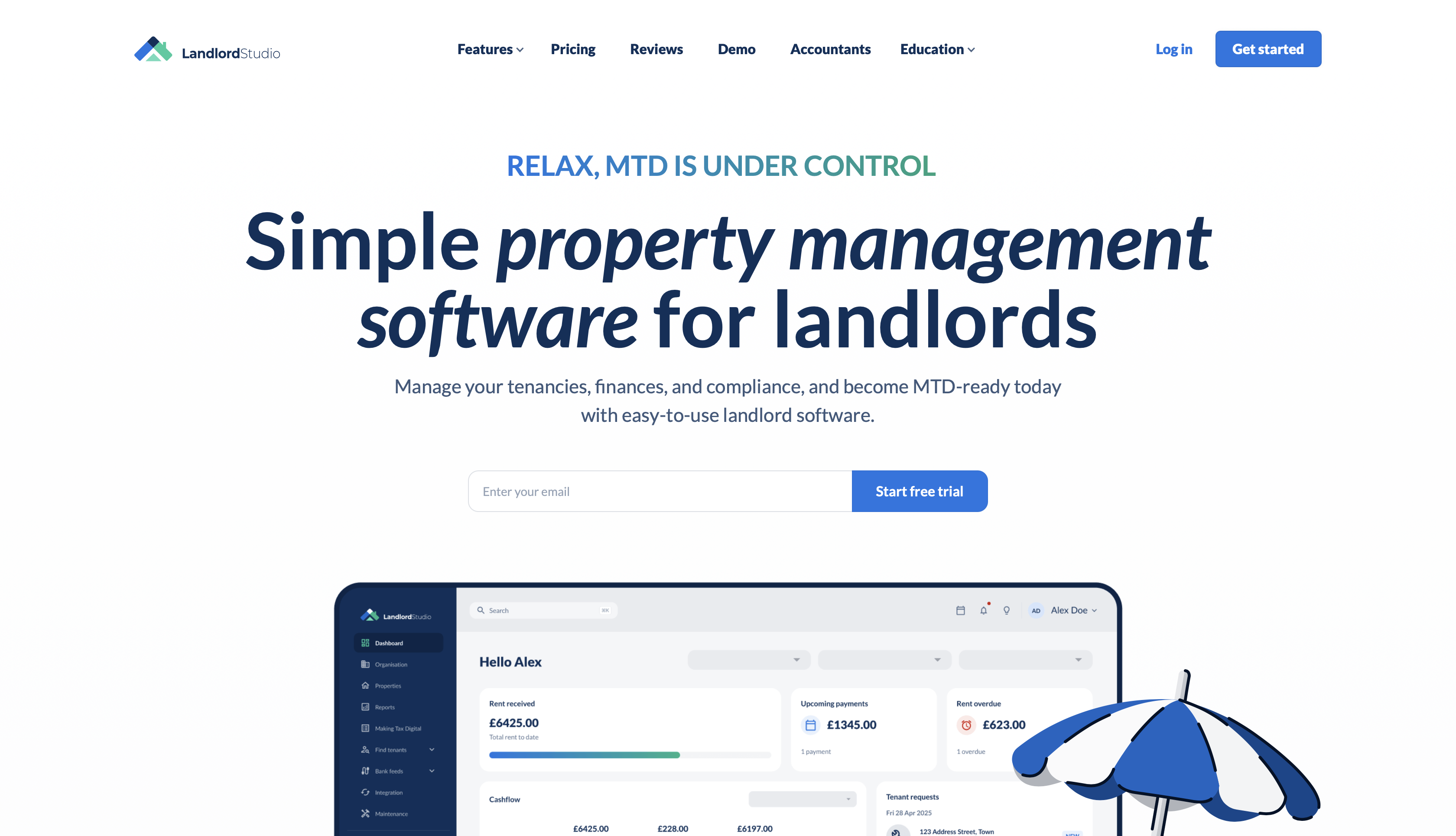
Landlord Studio is built around its mobile app, which makes it handy for landlords who’d rather snap receipts on the go than sit at a desk with a spreadsheet. It’s straightforward: link your bank, log your rental income, scan your expenses, and you’ve already got a head start on your next self assessment tax return. It will also help you plan your next tax payments.
Pricing
Free for up to three properties, with paid plans starting at about £12 a month.
Key features
Every transaction can be tied back to the right property, so you know your numbers are accurate. Reports are formatted in a way that accountants actually want to see, which saves you from endless back-and-forth emails. The app also supports digital records for Making Tax Digital, which is going to come in handy.
Strengths
It’s simple, affordable, and genuinely convenient. If you don’t need complex property management functions but want to keep on the right side of HMRC with clean records, Landlord Studio does exactly that – without fuss.
3. Hammock
Best for: Landlords who want a clear picture of their finances, day to day.
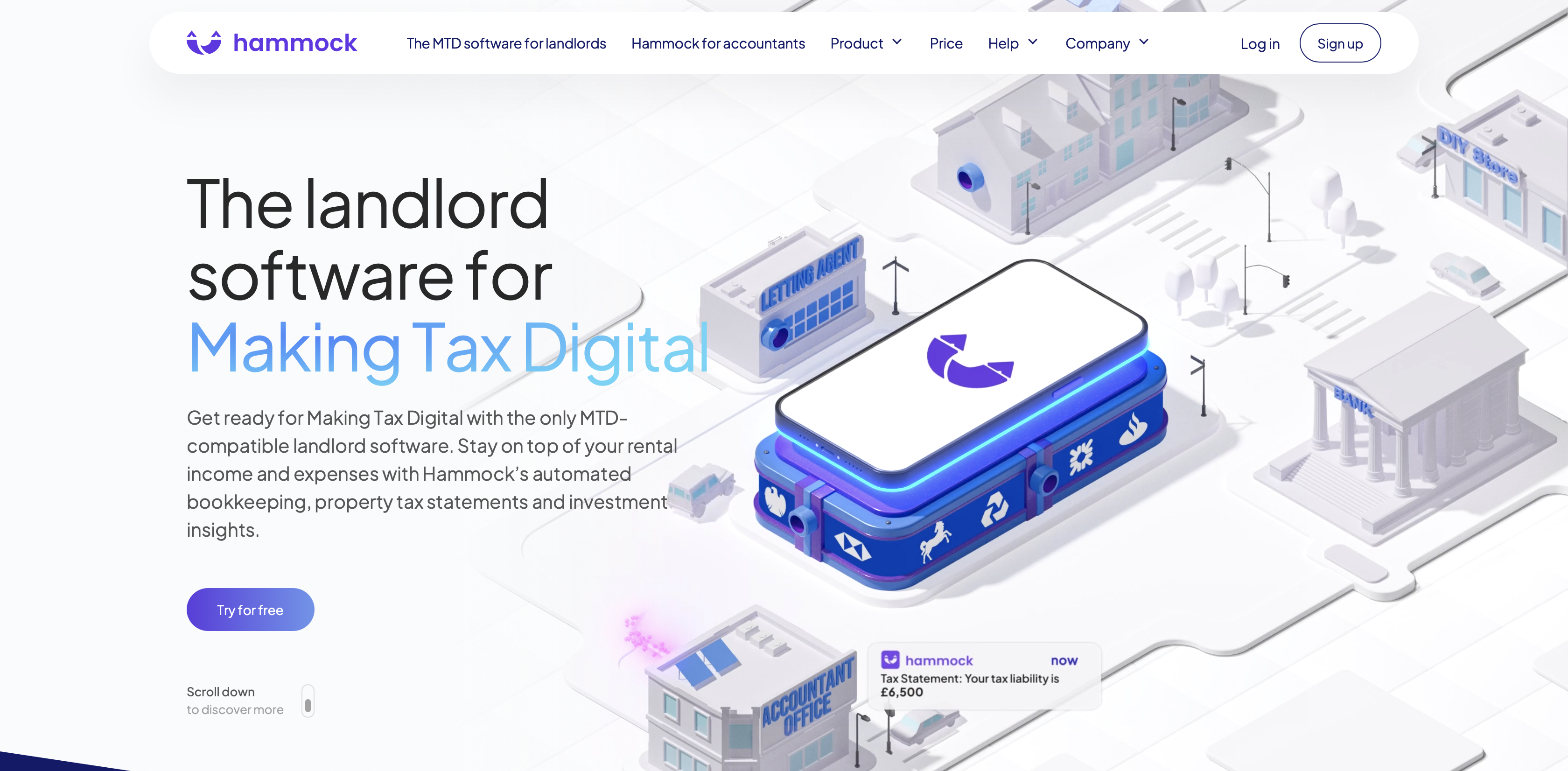
Hammock connects directly to your bank accounts, so instead of waiting for spreadsheets or end-of-year surprises, you see what’s happening in real time. Rent in, bills out, where the gaps are. It’s a bit like having a live dashboard for your property business. It will help you keep on top of everything so you have a clearer view of your income, costs, and likely tax position.
Pricing
Free to get started, with paid plans from around £8 per month.
Key features
Every rent payment is automatically matched to the right tenant. Missed payments don’t get buried; the system flags them straight away. Expenses are tracked too, so by the time tax season rolls around you already have a breakdown of rental income, allowable expenses and even a forecast of your tax liability. That last one matters: instead of being hit with a big tax bill, you can plan months ahead.
Strengths
Where Hammock shines is visibility. You don’t have to guess what your numbers look like; the software lays it out clearly, even if you own several properties. For landlords who’ve ever been caught off guard by due dates, this kind of early warning system can save you a lot of stress year on year.
4. Xero
Best for: Landlords who already work with an accountant.

Xero is one of the most recognised accounting tools in the UK. It wasn’t designed just for landlords, but because so many accountants use it, it’s often the easiest way to stay in sync with professional advice. For landlords whose property income sits alongside another business, Xero’s flexibility can be a real plus.
Pricing
Starts at £16 per month, with higher plans offering more features and users.
Key features
It handles bank feeds, reconciles income and expenses, and supports MTD compliance. You can set up categories to track property costs separately and generate reports that highlight your tax liability. And because most accountants are fluent in Xero, you don’t have to explain what you’re sending over – they’ll know how to work with it. Xero is often chosen by landlords who run their properties through a limited company, as it can handle both property finances and wider business accounting. That includes tracking your corporation tax position.
Strengths
For landlords who want software that their accountant already understands, Xero saves time and avoids confusion. It’s not as property-specific as some tools here, but the trade-off is rock-solid accounting with a big ecosystem of integrations.
5. QuickBooks Online
Best for: Landlords who want a familiar accounting tool with strong tax features.

QuickBooks is a big name in small business accounting, and it covers landlords too. It’s approved for Making Tax Digital and offers a wide set of tools for keeping on top of income tax and tax returns. If you want something mainstream and well-supported, QuickBooks is usually near the top of the list.
Pricing
Entry-level plans from £10 a month, rising up to £115 depending on features.
Key features
Like Xero, QuickBooks brings in your bank transactions automatically. You can tag them against properties, generate clear reports, track finance costs, tax calculation and keep track of upcoming tax bills. There’s also a solid mobile app, so you don’t need to be at a desk to keep things updated.
Strengths
QuickBooks is widely recognised, so finding accountant support is easy. It’s also flexible, which makes it a good option for landlords who have both rental and other income streams to manage.
6. FreeAgent
Best for: Small landlords and side-hustlers who want something simple.
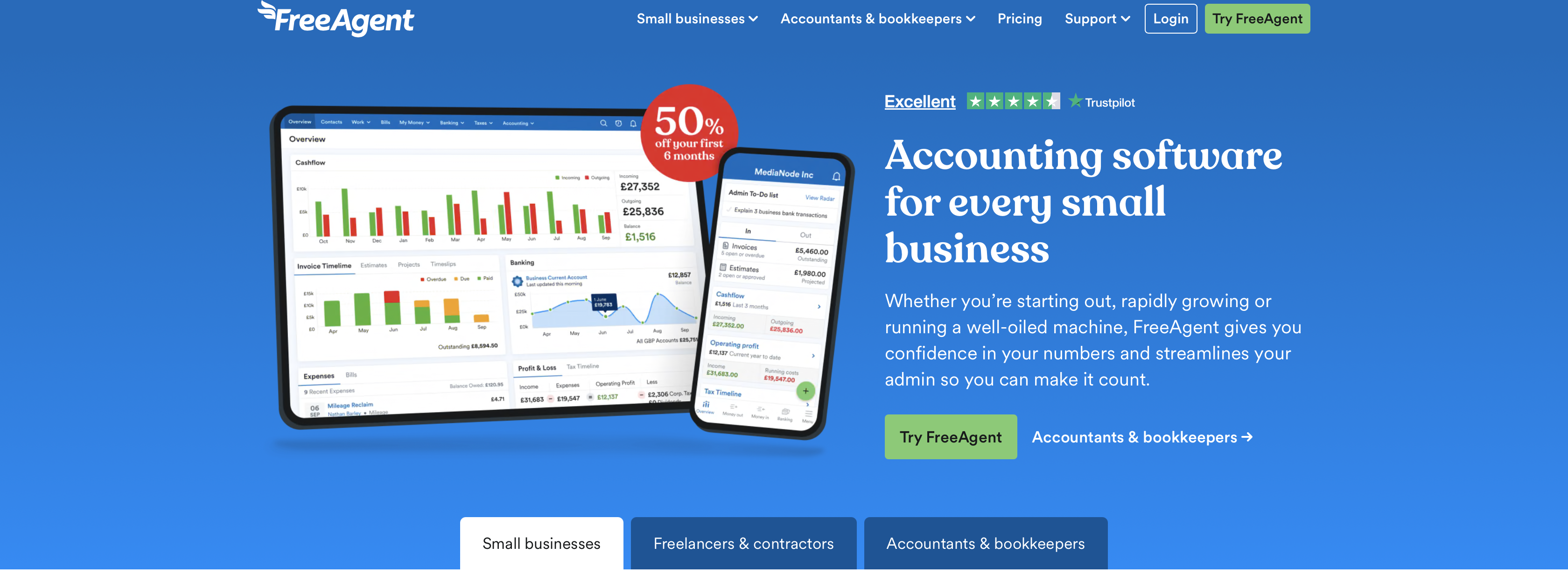
FreeAgent is a straightforward cloud accounting platform that’s popular with freelancers and small businesses. Many UK banks even offer it free with certain accounts, which makes it a cost-effective way to handle rental income alongside other earnings.
Around £14.50 per month, or free through some bank accounts.
Key features
FreeAgent shows a running timeline of your due dates and expected tax bills, which makes budgeting far less stressful. You can log allowable expenses, track financial records, and give your accountant access without hassle. Everything is stored digitally, ready for MTD.
Strengths
Its big selling point is simplicity. For landlords with just a few properties, FreeAgent gives you enough functionality to stay compliant without drowning you in features you’ll never use.
7. Untied
Best for: Landlords who just want to handle self-assessment quickly.
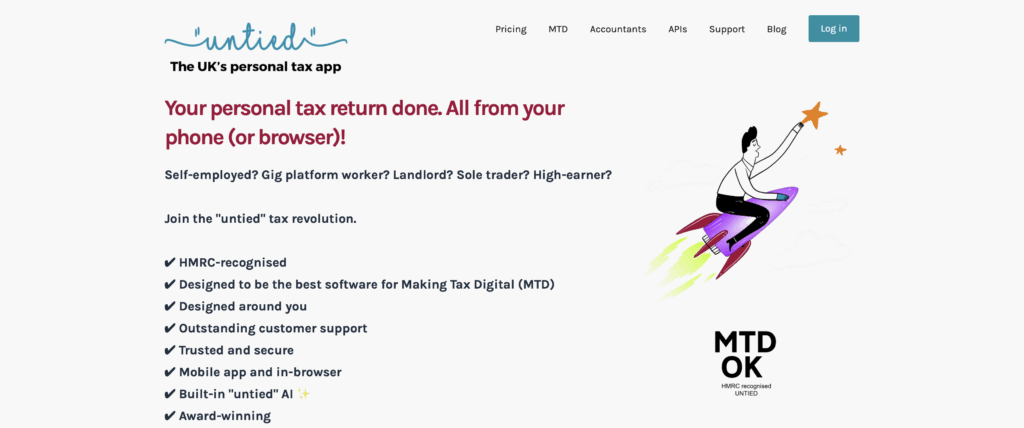
Untied is a mobile-first tax app aimed at making self assessment less painful. It’s not built for property specifically, but you can log rental income and expenses and file directly with HMRC from your phone. If you just want to get your tax returns done without spreadsheets, it’s a neat option.
Pricing
Starts from around £64.99 a year (roughly £5.40 a month).
Key features
Untied keeps a running estimate of your tax owed and supports the quarterly updates required under MTD. It’s very lightweight, which makes it fast to set up, and the ability to file straight from the app means one less thing to worry about when deadlines loom.
Strengths
It won’t manage your whole rental property business, but it doesn’t try to. For landlords with a single flat or a very small portfolio, Untied is a cost-effective way to pay tax and stay compliant without investing in a more complex system.
How to Choose the Right Tax Management Software
We have provided you with some great options there, but only you will know which one is the right option for your business. Here are some things to think about when considering your tax management software.
- Portfolio scale – Do you need detailed property-by-property breakdowns, or a broad accounting tool?
- Mobile access – On-the-go landlords may prefer Landlord Studio or Untied.
- Document storage and tenancy functions – Tools like Landlord Vision combine tax with wider property management.
- Accountant involvement – Xero, QuickBooks and FreeAgent work seamlessly with accountants.
- Budget vs feature depth – Hammock and Studio are cost-effective, but Landlord Vision offers the widest feature set.
Frequently Asked Questions
Landlord Vision, Xero, QuickBooks, FreeAgent, Hammock, and Untied are all HMRC-recognised or pledged for Making Tax Digital.
Yes. Landlord Vision, Hammock and FreeAgent provide alerts for upcoming due dates and expected tax bills.
Yes. Most platforms allow data export or accountant access. Xero, QuickBooks, and FreeAgent are especially popular with accountants, while Landlord Vision also provides secure sharing of financial records and compliance data.
If your needs are mainly digital record keeping and submissions, general accounting tools can work well. If you want property-level tagging, clearer rental reporting, and supporting documents stored against each property, landlord-focused property tax management software is often a better fit.
You will need clear digital records of rental income and expenses, with enough detail to support quarterly updates and year end reporting. The right software helps by keeping transactions categorised, linking costs to properties, and storing evidence such as receipts and invoices.
Start with what you need to stay organised and compliant, then check online property management software costs against the level of reporting and automation you will use. For larger or more complex portfolios, paying for stronger reporting and cleaner workflows often saves time and reduces risk.
Conclusion & Next Step
Keeping on top of property tax rules takes time, especially when your portfolio grows and record keeping gets more complex. The right property tax management software helps by keeping income, expenses, and supporting documents organised in one place, so you spend less time chasing paperwork and more time staying on top of deadlines.
A practical next step is to shortlist two or three tools that match your portfolio size and working style. Check whether they support the MTD for Income Tax workflows you need, then use free trials or demos to see how they handle property-level tracking and reporting in day-to-day use. Start a free trial or book a Landlord Vision demo here to see how it fits your record keeping and reporting workflow.